For over 4 months, I couldn’t figure out what was happening to my skin.
What started as dozens of tiny bumps across my forehead turned into months of researching ingredients, trying treatments, and wondering why nothing seemed to work.
If you’re reading this because your skin suddenly changed and you’re wondering what the heck is going on, I hope my experience helps you get answers a little sooner than I did.
If you’re still trying to figure out whether your breakouts might be fungal acne, I explain the symptoms, common causes, and treatment options in my Complete Beginner’s Guide to Fungal Acne.
When Everything Changed
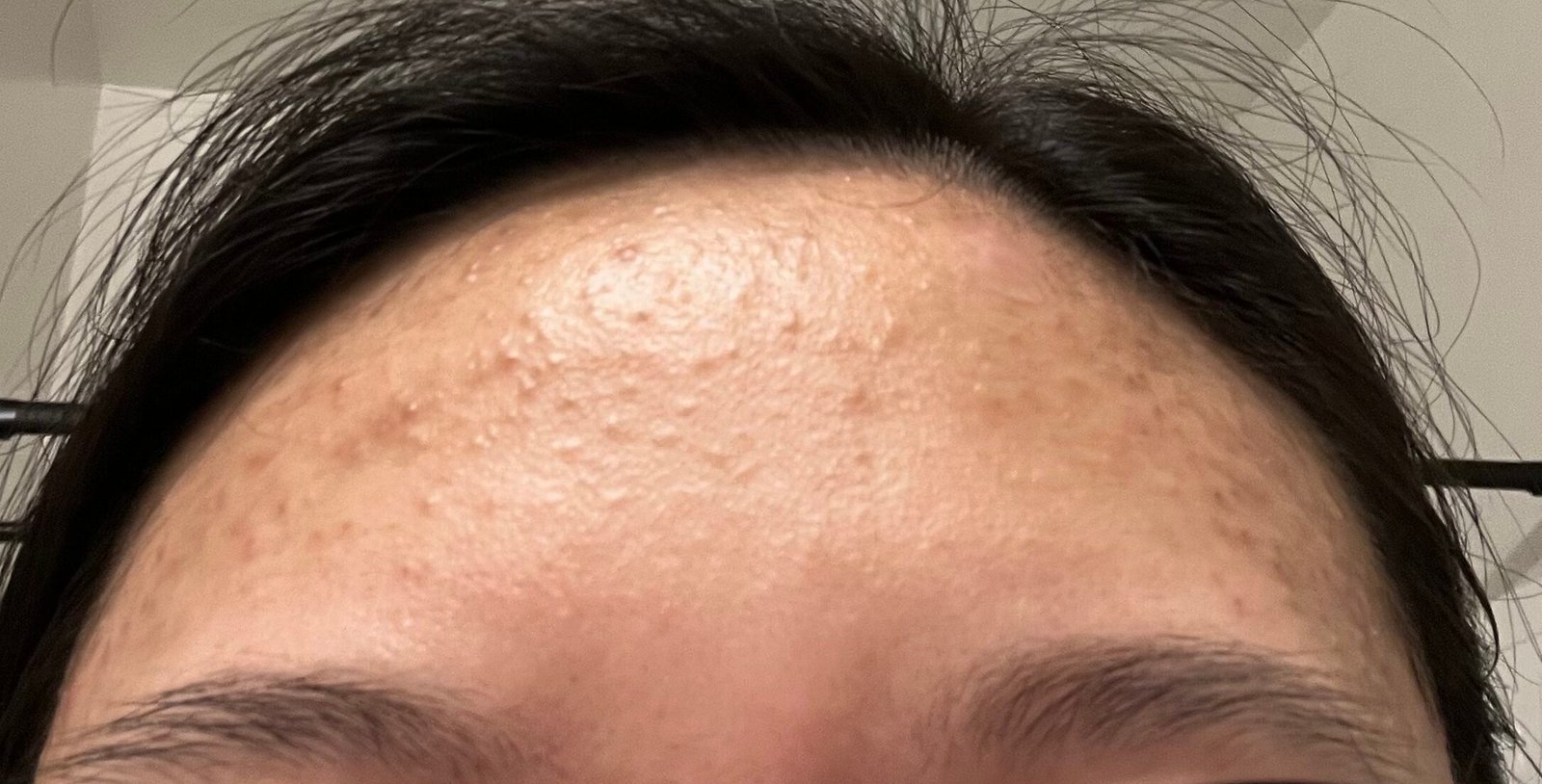
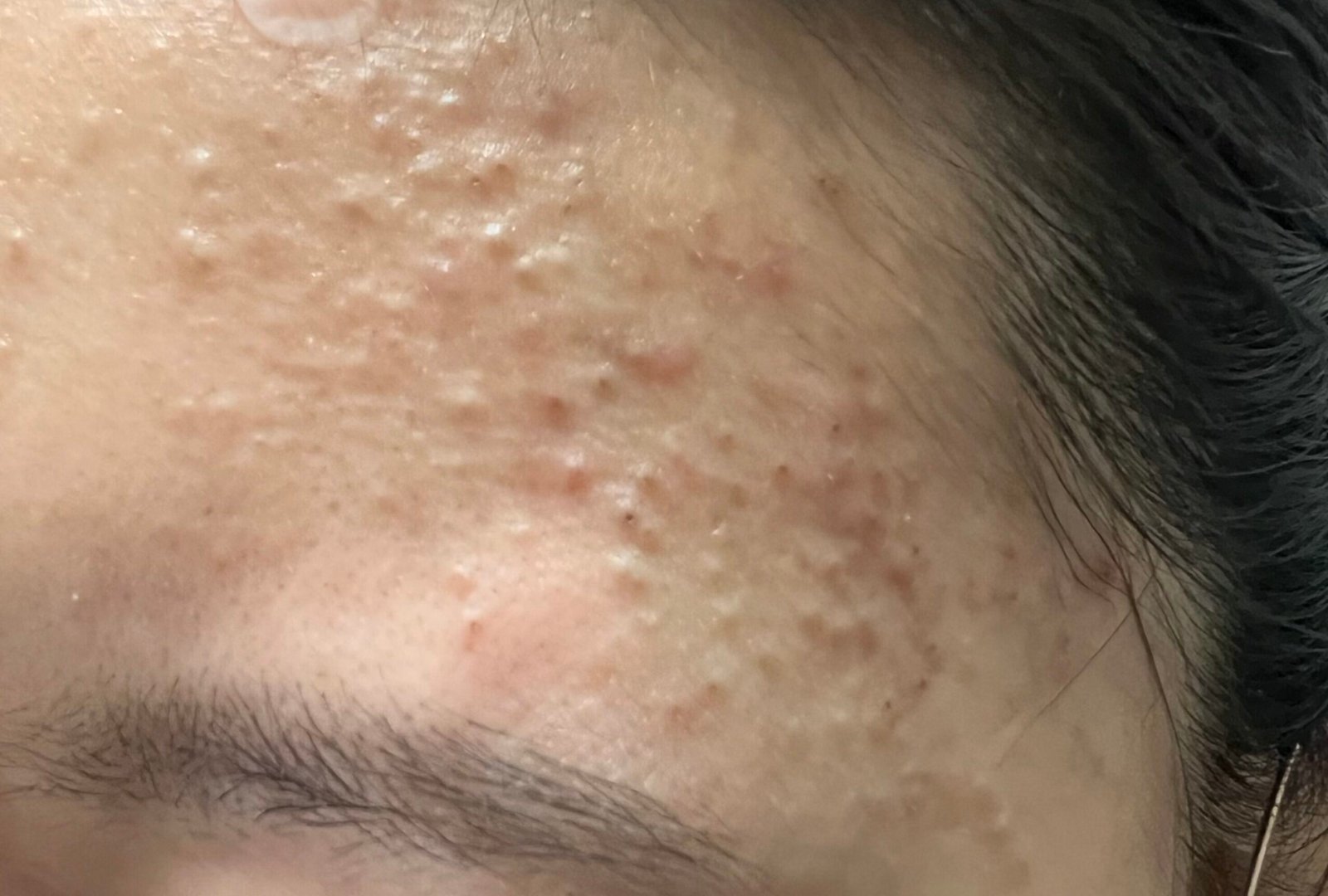
One morning, I woke up and noticed dozens of bumps across my forehead and temples. They all looked almost identical, and I honestly felt like they had appeared overnight.
At first, I assumed I was just going through a bad breakout. But there were so many of them, probably 30 or 40, that I remember wondering if it was actually some kind of allergic reaction instead.
My temples also had what looked like clogged pores and a few blackheads mixed in. It didn’t look like the acne I was used to dealing with.
Maybe it was one of my skincare products? Had I started using something new? Had I eaten something bad?
As I thought back on the weeks before the bumps appeared, these two experiences came to mind.
The first was a two-day trip to Universal Studios in Orlando, Florida in the middle of July. It was incredibly hot, over 100 degrees both days. I spent more than eight hours outside, drenched in sweat while wearing makeup, and didn’t wash my face until I got back to the hotel each evening.
Then, about ten days later, I moved. I spent another day outside in the summer heat, sweating as I carried boxes and unpacked before finally washing my face that night.
Then, just a few days after the move, I woke up with the bumps.
I can’t know for certain that those experiences caused it, but looking back, both involved hours of heat, humidity, and sweating.
At the time, though, I had never even heard of fungal acne. I just knew something wasn’t right.
Trying Everything
So, I did what I think a lot of us would do these days: I turned to ChatGPT.
My search history quickly filled up with things like:
- “tiny bumps all over forehead”
- “small bumps that appeared overnight”
- “why do I suddenly have so many bumps?”
- “congested skin”
One article led to another, then Reddit threads, and before I knew it, I’d fallen down a full-blown acne rabbit hole. Still, I had no idea what I should actually change.
After a couple of weeks with no improvement, I remember thinking, Something is really off. I’ve never seen my skin like this before.
As I kept searching, I came across something called fungal acne.
Honestly, the name alone sounded a bit alarming.
Then, I saw a recommendation: Nizoral shampoo.
If you’ve never heard of it, it’s actually a dandruff shampoo, like Head & Shoulders. I thought, Wait…you want me to put shampoo on my face?
Apparently, yes.
So I immediately ordered a bottle.
The next morning, I applied it all over my forehead and temples, waited about five minutes, and washed it off.
To my surprise, I felt like the bumps on my forehead actually looked a little smaller.
I remember thinking, It’s working!
Then I finished the rest of my skincare routine and went about my day.
By that evening, the bumps looked just as bad as they had before. For the next couple of weeks, that cycle repeated itself.
Every morning after using the Nizoral, it looked like I was making progress. By the end of the day, it felt like I was back where I started.
I kept wondering, Is this actually working or am I just imagining it?
Still convinced I simply hadn’t found the right solution yet, I tried face masks, acne spot treatments, pimple patches, you name it.
The pimple patches actually worked on a few spots, which made sense once I realized I was dealing with both regular acne and fungal acne (lucky me).
But there were so many tiny bumps across my forehead that I remember thinking, I can’t exactly put 40 pimple patches on my face every night.
At that point, I still wasn’t convinced fungal acne was actually the problem. I just knew nothing I tried seemed to be working.
Going to the Dermatologist
After a few weeks of trying everything I could think of, I finally made an appointment with a dermatologist.
I’d put off making an appointment because I didn’t know any dermatologists in the area, wasn’t sure what it would cost, and still felt like this was something I should be able to figure out on my own. But by that point, I was desperate for an answer.
I walked into the appointment feeling hopeful. More than anything, I wanted an answer.
I explained everything that had happened—how the bumps seemed to appear almost overnight, what I had already tried, and why I thought it might be fungal acne.
But after examining my skin, the dermatologist didn’t think fungal acne was the cause. Instead, I was prescribed a sulfur cleanser, adapalene gel, and benzoyl peroxide.
I wanted to trust the treatment plan, so that night I followed the instructions exactly.
After just one application, my skin burned.
After doing more research, I realized I’d likely damaged my skin barrier. Even just putting on lotion burned.
It wasn’t because I thought I knew more than a dermatologist. It was because my skin was telling me something wasn’t right. My gut told me I was dealing with fungal acne, even if it hadn’t been confirmed during my appointment.
So I went back to researching. I read even more articles and compared countless ingredient lists.
Looking back, that appointment ended up being a turning point—not because it solved the problem, but because it pushed me to trust what my skin was telling me.
And this time, I finally found the missing piece.
The Real Turning Point
A few days after my appointment, I stumbled across something that completely changed the way I approached fungal acne.
I found an ingredient checker.
It was a website where you could copy and paste a product’s ingredients to check if it was safe for Malassezia, which is the yeast that causes fungal acne.
Until that moment, I had been so focused on finding the right treatment to add on that I never considered that my everyday skincare products might be working against me.
So, I started copying and pasting the ingredient lists from every product I owned into the checker.
One after another, every product came back with ingredients that could potentially trigger fungal acne.
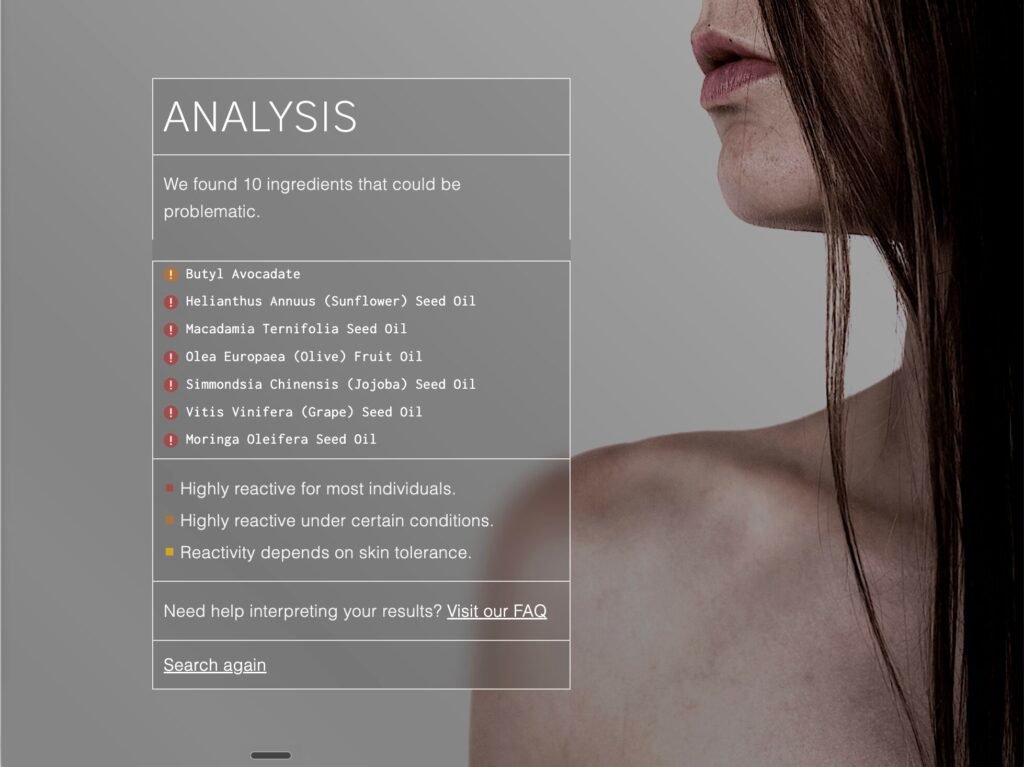
I couldn’t believe it. My heart dropped.
My cleanser.
My toner.
My moisturizer.
Every. single. one. was not fungal-acne safe. Even products I’d been using for years without a second thought.
Suddenly, everything started to make sense.
No wonder the Nizoral seemed to help in the morning, but then my skin looked just as bad by the evening. Every day, I was treating the fungal acne for a few minutes, then applying products that were likely feeding it for the rest of the day.
So, I made the decision to start over.
Not by buying every product people recommended online, but by rebuilding my routine one product at a time.
I replaced my cleanser.
Then my moisturizer.
Then my sunscreen.
Eventually, almost every product in my routine changed. Over time, I found a routine that finally worked for my skin. If you’re curious about the products I still use today and why they’ve earned a permanent place in my routine, I share everything in My Simple Fungal Acne-Safe Skincare Routine.
After months of feeling stuck, I felt hopeful.
Not because my skin had magically cleared overnight.
But because I finally had a plan that actually made sense.
Slowly, Things Started to Change
The changes didn’t happen overnight.
In fact, for a while, I still found myself checking the mirror every morning, wondering if anything was actually different.
But then I started noticing.
The bumps were looking less angry.
My forehead felt smoother.
Week by week, my skin slowly started to look like itself again.
It wasn’t a dramatic before-and-after transformation. It was the kind of progress you almost don’t notice until one day you realize you’re no longer thinking about your skin every hour.
The more my skin improved, the less I felt the need to keep searching for the next thing that might fix it.
Instead of chasing every new skincare trend or viral recommendation, I started paying attention to ingredients, introducing products one at a time, and giving them enough time to work before deciding whether they were worth keeping.
Over time, I found a simple routine that my skin genuinely liked.
Some of the products I use today have been in my routine for months, and I honestly don’t feel the need to keep searching for something better.
What I Learned
If there’s one thing this experience taught me, it’s that sometimes the biggest breakthrough comes from asking a different question.
For months, I focused on finding the right treatment. I never stopped to ask whether the products I was already using every day might actually be part of the problem.
That experience also taught me to trust my instincts.
Early in my research, I had a feeling I was dealing with fungal acne. Even after my dermatologist thought otherwise, I couldn’t shake that feeling. That doesn’t mean we should ignore medical advice or assume we know better. But we often know when something doesn’t feel quite right. If your instincts are telling you something is off, it’s okay to keep asking questions, seek another opinion, and continue searching for answers.
If you’re dealing with fungal acne right now, here’s what I’d want you to know:
I know how discouraging it can feel when nothing seems to be working.
But I also know how encouraging it feels when you finally start understanding why.
I hope sharing my experience helps someone else get answers a little sooner than I did.
Continue Exploring
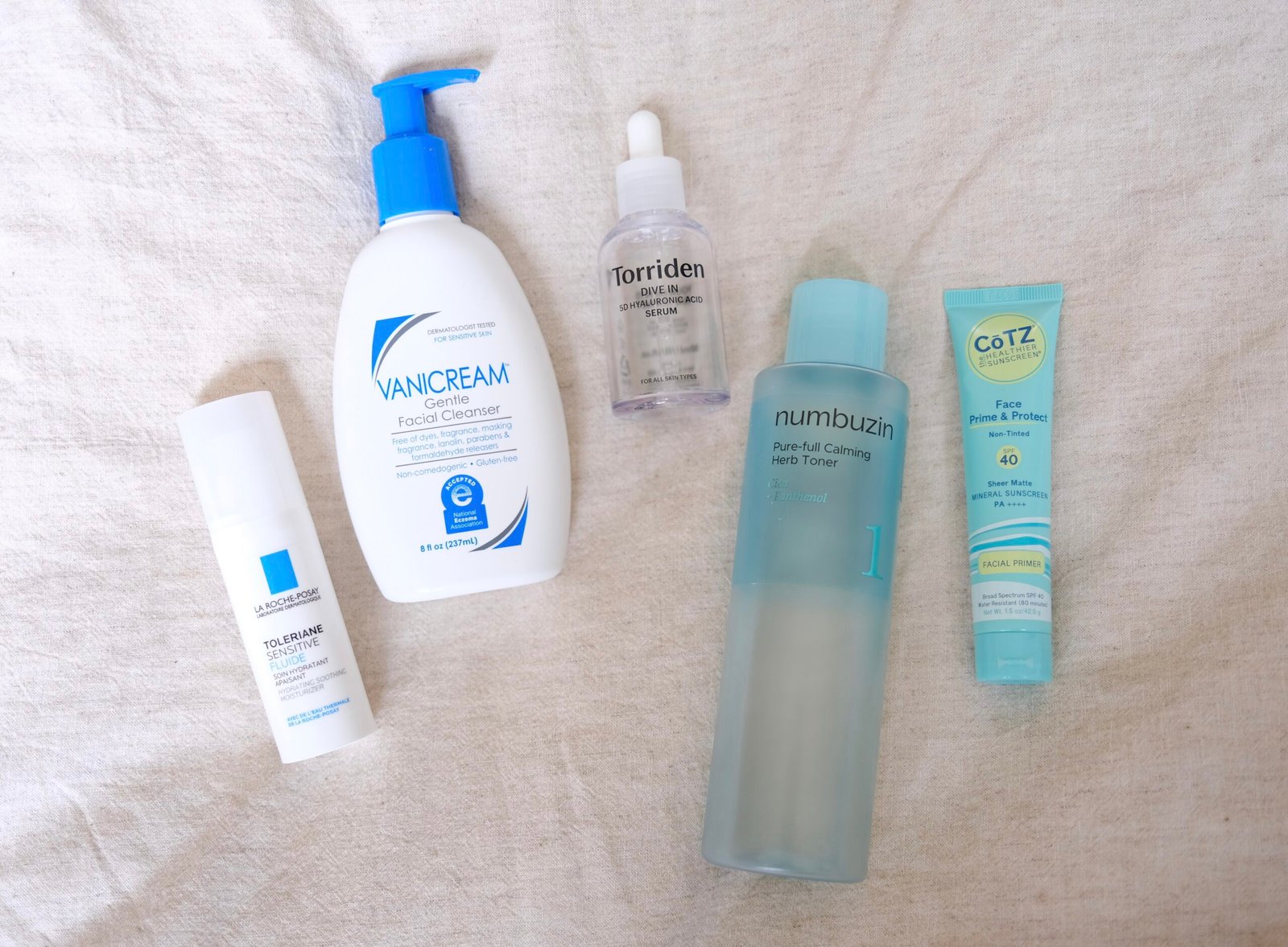
My Fungal Acne Skincare Routine
The exact products I use every morning and evening, how I layer them, and why each one has earned a permanent place in my routine.
The Complete Beginner’s Guide to Fungal Acne
Everything you need to know about fungal acne, including symptoms, causes, treatment, and how to tell it apart from regular acne.