When I first started drinking matcha years ago, I never imagined making it at home. I just knew I liked ordering it at cafés.
Eventually, I realized that making good matcha at home was much simpler than I expected. All I really needed were a few basics.
If you’re curious about making matcha but aren’t sure where to begin, this guide will walk you through everything you need to know.
What Is Matcha?
At its simplest, matcha is powdered green tea, but it’s prepared very differently from the green tea most people are familiar with.
Instead of steeping tea leaves in hot water and removing them, matcha powder is whisked directly into the water. This gives it a richer texture and a bolder flavor than a typical cup of green tea.
The leaves used to make matcha are also grown in the shade before they’re harvested, which helps create the vibrant green color and smooth, slightly sweet flavor that high-quality matcha is known for.
Matcha has been enjoyed as part of Japanese tea culture for centuries. Today, people around the world enjoy it in many different ways, from traditional bowls of whisked matcha to iced lattes and desserts.
What Does Matcha Taste Like?
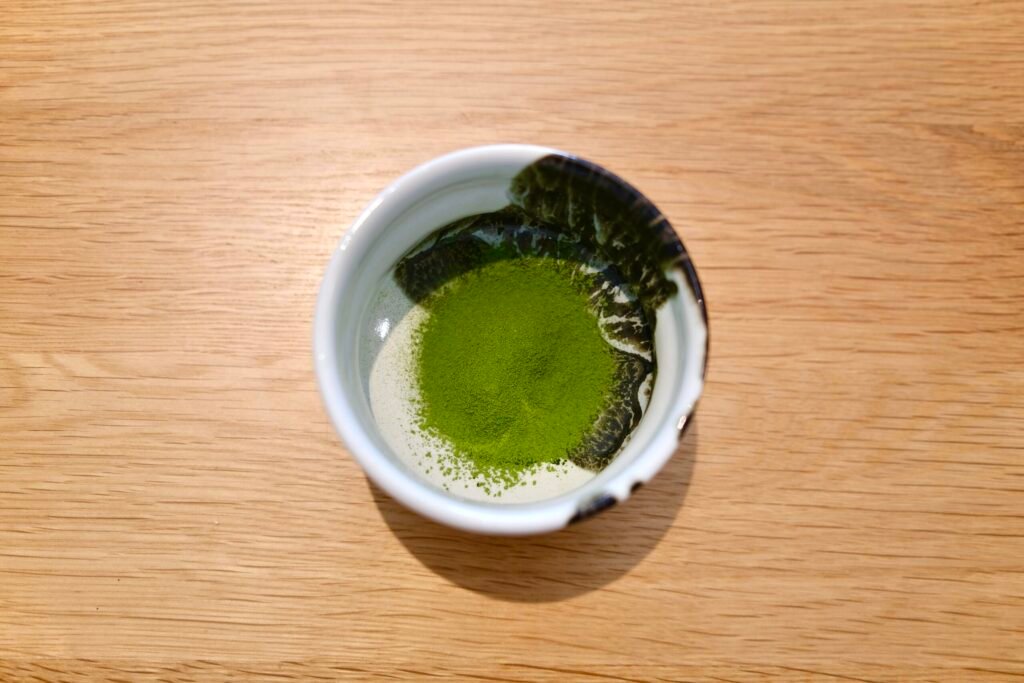
Good-quality matcha has a smooth, earthy flavor with subtle grassy notes and a natural sweetness.
If your only experience with matcha has been a sweetened latte from a café like Starbucks, making it at home may taste a little different at first. Many cafés use enough milk and sweetener that the natural flavor of the matcha becomes much harder to notice.
The first time I made matcha at home, I was surprised by how much more I could actually taste. A good-quality matcha is smoother, more balanced, and much less bitter than many people expect.
Like coffee, taste is personal. Some people enjoy matcha prepared with only water, while others prefer it as a latte with milk and a little sweetener (me!). There isn’t one right way to enjoy it, it’s simply about finding what you like.
Why People Love Matcha
Over the past few years, matcha has become increasingly popular. Whether you’ve seen it on social media, on your favorite coffee shop’s menu, or heard about its health benefits, there’s a good chance you’ve been curious enough to give it a try.
I first got into matcha because I wanted something other than coffee. Some mornings I still want caffeine, but I don’t always want another cup of coffee. Matcha became my favorite alternative.
Over time, making matcha became something I genuinely looked forward to, and now starting my morning with an iced oat milk matcha latte is one of my favorite parts of the day.
How to Choose Your First Matcha
Buying your first matcha can feel surprisingly overwhelming. There are dozens of brands, different price points, and labels that can seem confusing.
If you’re just getting started, I’d focus less on finding the “perfect” matcha and more on choosing one from a reputable company with consistently good reviews. You don’t need the most expensive matcha on the market, but I’d also resist the temptation to buy the cheapest option you can find.
When you open it, one of the first things you’ll notice is the color. Good-quality matcha is usually a vibrant, bright green. If it’s dull, olive, or yellow-green, it’s more likely to taste bitter and less fresh.
Once you’ve found a good-quality matcha to start with, you can always experiment with different ones over time.
Do Matcha Labels Matter?
As you shop for matcha, you’ll probably come across labels like ceremonial grade and culinary grade.
One thing that’s helpful to know is that these aren’t official grading standards in Japan. Instead, they’re marketing terms commonly used outside Japan to suggest how a matcha is intended to be used. In general, culinary matcha is marketed for baking and desserts, while ceremonial matcha is marketed for drinking.
When I visited Japan, one thing that surprised me was how rarely I saw matcha described as ceremonial grade. Instead, I found a much wider variety of matcha, each with its own characteristics and intended use.
For that reason, I wouldn’t get too caught up in the labels. As you try different matchas over time, you’ll naturally discover the styles and flavors you enjoy most.
What You Need to Make Matcha
One of the biggest surprises for me was how little you actually need to start making matcha at home.
Essentials
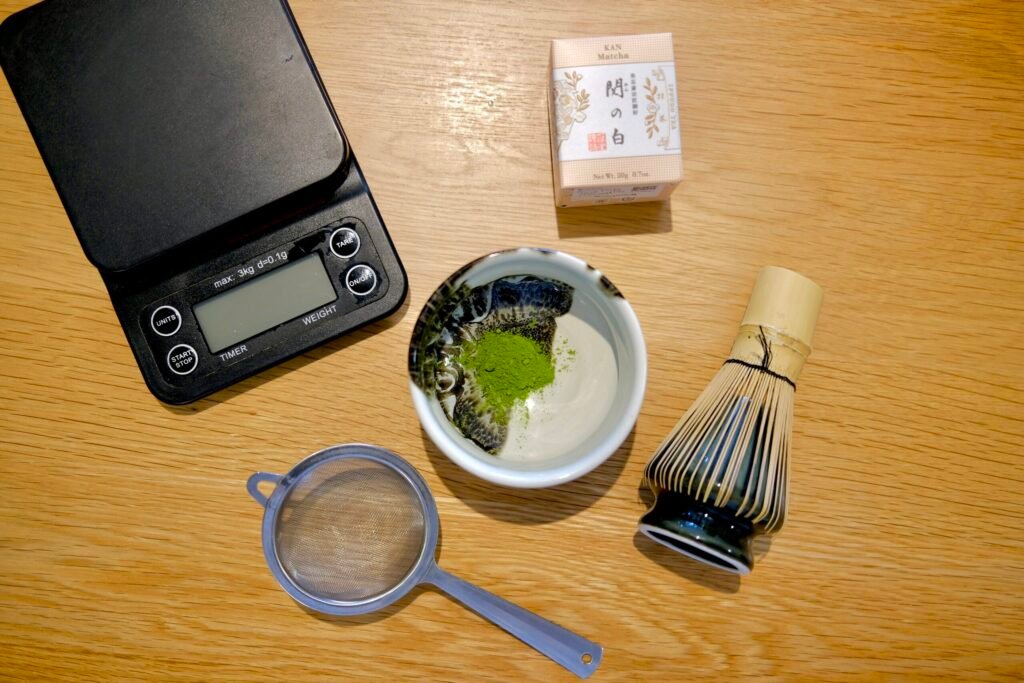
- Matcha
- Bamboo whisk (chasen) or electric frother
- Wide bowl
- Measuring spoon
Nice to Have
- Fine mesh sifter
- Digital scale
- Temperature-controlled kettle
- Bamboo scoop
- Whisk holder
If I had to recommend one extra tool, it’d be a fine mesh sifter. Matcha naturally forms small clumps, and sifting it beforehand makes it much easier to whisk into a smooth, creamy drink. It’s a small addition that makes a surprisingly big difference.
Beyond that, don’t let the equipment stop you from getting started. Start with the basics and add pieces over time if you find yourself making matcha regularly. The beautiful bowls and accessories can always come later.
How to Make Matcha
Making matcha at home is much simpler than it looks.
- Sift the matcha into your bowl to help prevent clumps (optional, but recommended).
- Add a small amount of hot, but not boiling, water.
- Whisk quickly in a zigzag or “W” motion until a light layer of foam forms.
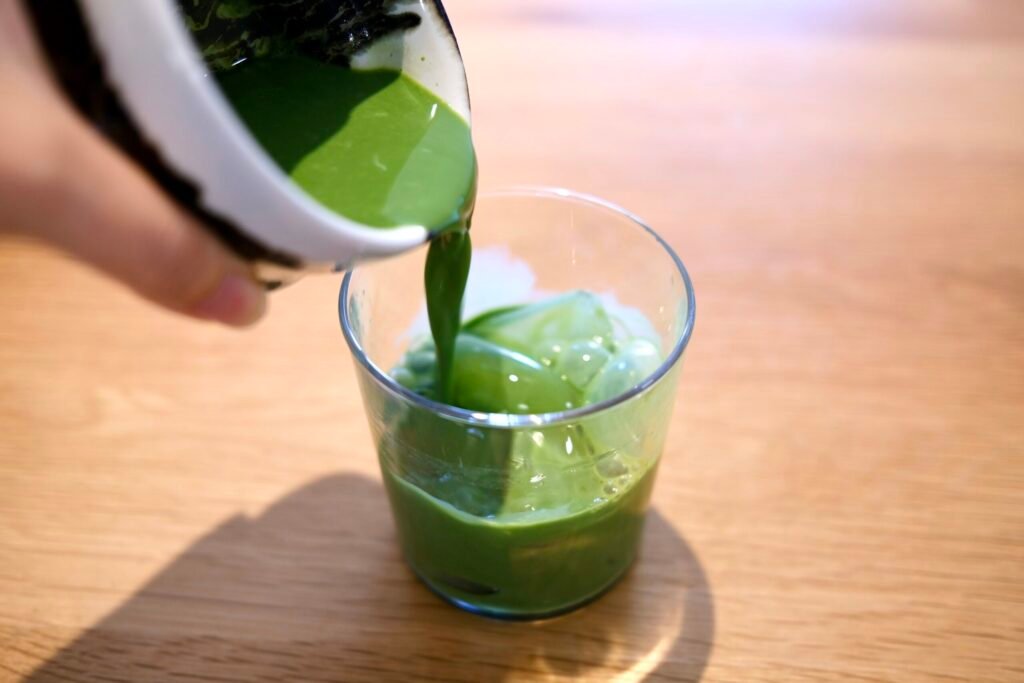
- Enjoy it as is, or pour it over milk and ice for a matcha latte.
Once you’ve made it a few times, the entire process only takes a couple of minutes.
If you’re looking for exact measurements and my favorite recipe, I share everything in My Favorite Iced Matcha Recipe.
Frequently Asked Questions
Does matcha have caffeine?
Yes. Matcha naturally contains caffeine. It also contains L-theanine, an amino acid naturally found in tea. Everyone responds to caffeine differently, so it may take a little experimenting to figure out what feels best for you.
Why is my matcha bitter?
If your matcha tastes overly bitter, a few things could be contributing: lower-quality matcha, water that’s too hot, or using more matcha than you prefer. A few small adjustments can make a noticeable difference.
Can I make matcha without a bamboo whisk?
Yes. A bamboo whisk creates the smoothest texture and a light layer of foam, but if you’re just getting started, you can still make matcha without one.
Why is my matcha clumpy?
Matcha naturally forms small clumps over time. Sifting it before whisking is the easiest way to create a smoother, more evenly mixed drink.
Can I drink matcha every day?
Many people do! Like coffee, it’s simply worth paying attention to how much caffeine feels right for your body.